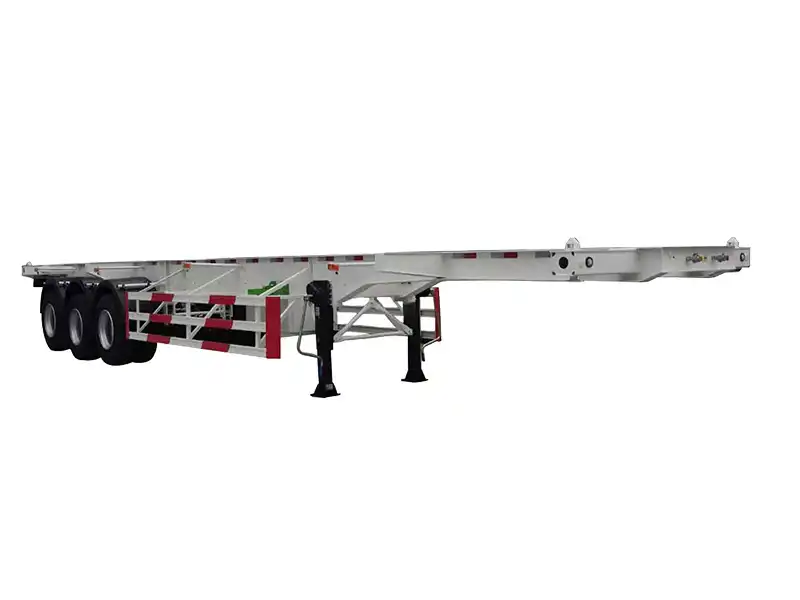
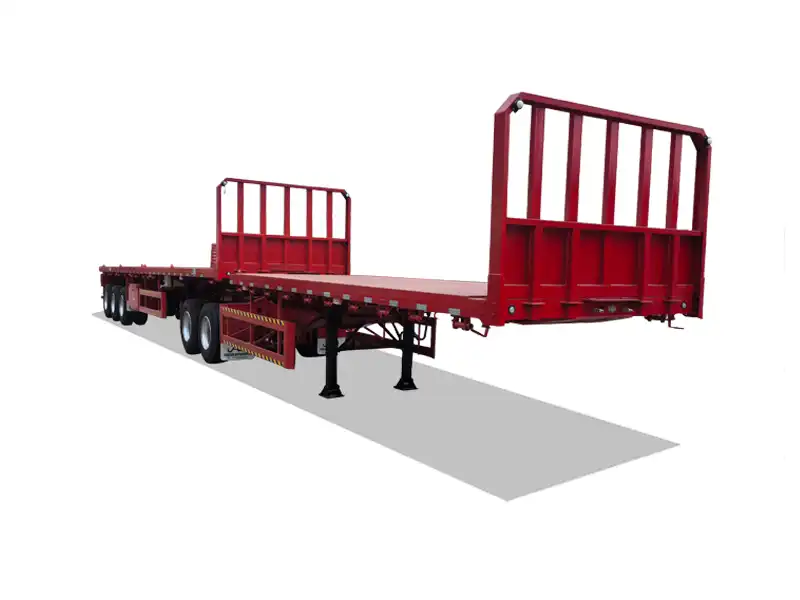
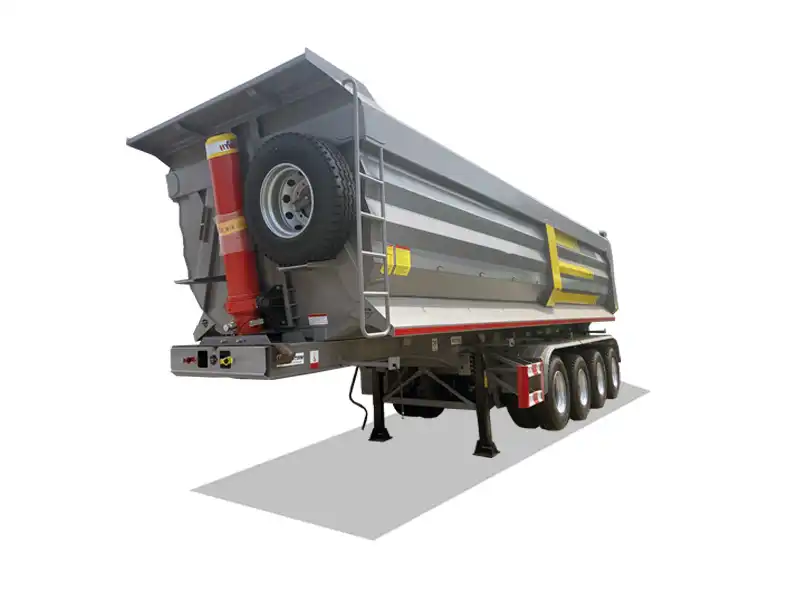
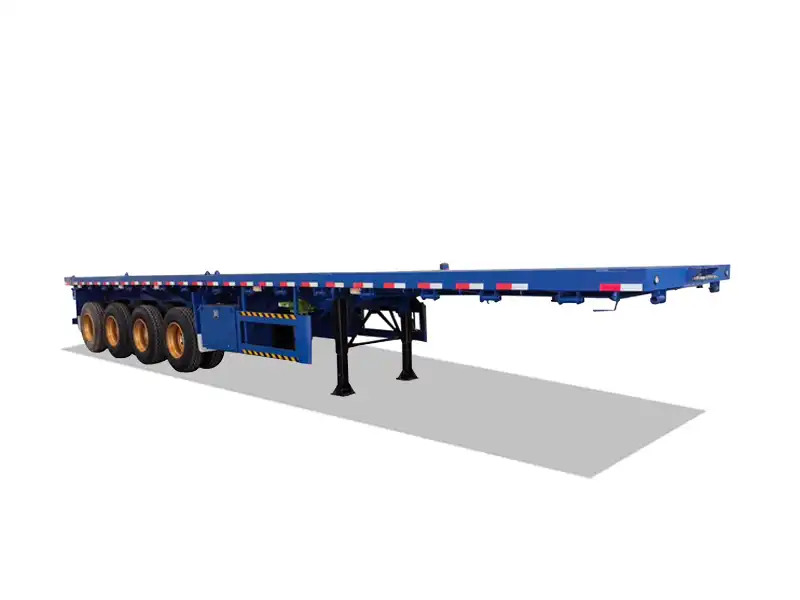
A 3 axle skeleton trailer, also known as a skeletal or skelly trailer, is a type of semi-trailer specifically designed for carrying shipping containers. It’s designed to transport standard containers, usually 20-foot, 40-foot, or even 45-foot containers. Some models can adjust their length to carry different sizes.
The skeleton trailer has a simple, lightweight framework, often made of high-strength steel, that cradles the container. It doesn’t have a floor or sides like other trailers, which keeps its weight low.
Key Features of Skeleton Semi Trailer:
Lightweight Construction: The skeletal frame reduces the trailer’s overall weight, making it more fuel-efficient and easier to maneuver.
Twist Locks: Twist locks are essential components in securing containers on trailers. They work by twisting and locking into the corners of the container, ensuring that it remains securely attached to the trailer during transport. This mechanism is crucial for the safety and stability of the load, especially during long hauls or when navigating rough terrain.
Versatility: Skeleton trailers are available in different lengths and configurations to accommodate various container sizes (e.g., 20-foot, 40-foot, or 45-foot containers).
Cost-Effective: Due to their simple design, they are generally more affordable than fully enclosed trailers.
The skeleton trailer is equipped with a remarkably simple and lightweight framework. This framework is frequently constructed from high-strength steel, providing excellent durability and strength while maintaining a low overall weight. It is specifically designed to cradle the container securely. Unlike other trailers, the skeleton trailer does not possess a floor or sides. This absence of a floor and sides significantly reduces its weight, making it more fuel-efficient and easier to maneuver. Additionally, the lack of these components allows for greater flexibility in loading and unloading containers, as there are no obstructions to impede the process.